Western Uganda Guide


Tooro Palace Guide

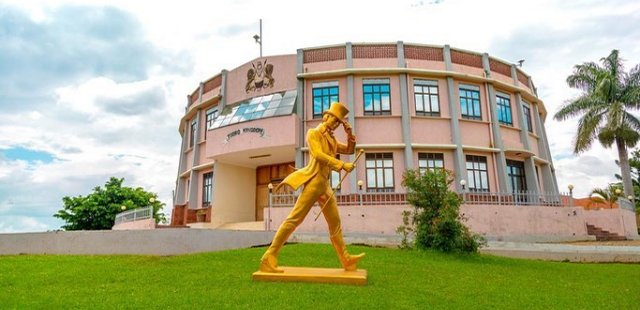
Perched on top of Karuzika Hill in Fort Portal on the Fort Portal - Kasese Road (see map below), stands the Tooro or Karuzika Palace and perhaps confusingly sometimes the 'Royal Palace in Kabarole', an enduring symbol of the Tooro Kingdom's rich heritage and resilience. More than just a royal residence, this grand building encapsulates centuries of history, serving as a cultural beacon for the Batooro people and a testament to their enduring spirit. Its commanding presence is a constant reminder of the monarchy's deep roots and its continuous journey through Uganda's complex historical tapestry.

Tooro itself is one of the four traditional kingdoms of Uganda that was abolished in 1967 but restored in 1993 and was originally born out of a secession from the Bunyoro-Kitara Kingdom in 1822.

It was founded by Prince Kaboyo Olimi I, the eldest son of Omukama of Bunyoro Nyamutukura Kyebambe III, who rebelled against his father and departed to form his own kingdom of Tooro annexing the southern part of his father's kingdom with the border between them being the River Muziizi. When his father died 13 years later, Olimi I of Tooro rejected calls to succeed him as Omukama of Bunyoro-Kitara, preferring to remain as head of the Tooro Kingdom. He was succeeded by his third son Rukirabasaija Kazana Ruhaga who ruled from 1865 - 1866 when he was murdered by his brother, Rukirabasaija Kasunga Kyebambe Nyaika, who then seized the throne by force.

Nyaika ruled until 1871 when the Kingdom of Tooro was invaded by an army from Buganda, in support of Nyaika's younger brother, Rukirabasaija Kato Rukidi. Rukidi's reign, however was to be short lived as the people of Tooro rejected him not least because of Buganda's role in his succession restoring Nyaika to the throne. Nyaika himself died the following year and, following a period of short reigns of his feuding sons, Tooro was absorbed back into the Bunyoro-Kitara kingdom from 1880 - 1891 when its independence was restored, with Rukirabasaija Daudi Kasagama Kyebambe III ascending the throne and reigning until 1928 as part of a deal with the Imperial British East Africa Company (IBEAC). The Tooro Kingdom then maintained a semi-autonomous status during this period of British colonial rule.

Kyebambe converted the kingdom to Christianity and was succeeded by his son Rukirabasaija Sir George David Matthew Kamurasi Rukidi III who died on 21 December 1965 and was buried at Tooro (Karambi) Royal Tombs. Rukidi III was succeeded by his fourth son Olimi III in 1965, however he was stripped of the title in 1967 when the kingdom was abolished by Milton Obote on declaring himself president of an independent Uganda. Olimi III then joined the Ugandan Foreign Service, spending some time as state ambassador to Cuba. He was reinstated on the throne in 1993 after the traditional Ugandan Kingdoms were restored under President Yoweri Museveni, however died two years later on 26 August 1995 (aged just 49) and was succeeded by his infant son Rukidi IV, the present day king who ascended the throne at the tender age of three.

During the period when the monarchy was abolished, Tooro Palace fell into disrepair and ended up ransacked and ruinous following internal Ugandan wars in 1979 until then president of Libya, Muammar Gadhaffi, provided funds to have it restored in the first few years of the new century having established a close bond with the infant king Rukidi IV. While the original royal enclosures were more traditional, built with local materials, the restored modern palace, often referred to as Karuzika, has seen various phases of construction and renovation.


Tooro Palace Guide

Tooro Palace Guide

Tooro Palace Guide

Tooro Palace Guide


Amabere Caves

Amabere Caves

The Amabere Caves are near Fort Portal and offer insights into local legends and folklore.
More >


Royal Tombs

Karambi Royal Tombs

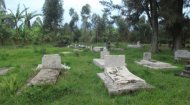
The Karambi Royal Tombs are the final resting place of Omukama Kasagama & Rukidi III on Kasese Road.
That's It!



Inside the Tooroo Royal Palace

Previous

Auto

Next

Toroo Palace Guide

Today, the palace is a striking blend of modern architectural influences and traditional aesthetics, designed to accommodate the needs of a contemporary monarch while respecting the kingdom's ancient customs. From its elevated position, the palace offers panoramic views of Fort Portal, the distant Rwenzori Mountains, and the surrounding Crater Lakes region, painting a picturesque backdrop to its regal stature. The structure, largely constructed with durable modern materials, features multiple wings, grand reception halls, and private quarters, all designed to facilitate royal functions and daily life. Its exterior, often painted in bright, welcoming colours, exudes an air of dignity and openness, contrasting with the more fortified appearances of some historical palaces. The design allows ample natural light and ventilation, reflecting a sensibility that balances grandeur with practicality, making it a functional yet imposing seat of power.

At its core, the Tooro Palace holds immense cultural significance. It is not merely a government building or a private home; it is the spiritual and symbolic heart of the Tooro Kingdom. The palace is the repository of the kingdom's identity, a place where age-old traditions are preserved and celebrated. Crucial royal ceremonies, such as the annual Empango (Thanksgiving ceremony), are hosted within its grounds, drawing together the Omukama, royal family, clan leaders, and thousands of Batooro subjects from across the kingdom and diaspora. These events are vital for reinforcing cultural identity and ensuring the continuity of the kingdom's heritage. The palace also houses various royal regalia and artifacts, each with its own story, connecting the present generation to their ancestors and the long lineage of Tooro monarchs. It serves as a living museum, a continuous educational space, and a powerful symbol of unity and pride for the Batooro people, affirming their unique place within Uganda's diverse cultural fabric.

In terms of functions and residency, the Tooro Palace serves multiple crucial roles today. Predominantly, it is the official residence of Omukama Oyo Nyimba Kabamba Iguru Rukidi IV, who, despite his youthful ascent, carries the weighty responsibilities of his ancestors. From its hallowed chambers, the Omukama presides over the Kingdom's affairs, receives local and international dignitaries, and holds court with his subjects. Beyond royal residency, the palace functions as the administrative headquarters of the Tooro Kingdom's cultural institution. It is where the Kingdom's council (Orukurato) convenes to discuss matters pertaining to cultural preservation, community development, and the welfare of the Batooro people. It acts as a central point for resolving disputes, fostering peace, and initiating development projects that benefit the community. The palace also hosts cultural performances, public addresses, and educational programs aimed at instilling Tooro values and traditions in younger generations, ensuring that it remains a vibrant, active hub for the kingdom's socio-cultural life.

Tooro Palace Opening Hours: Monday - Friday 8.30am - 5pm. Weekends 9am - 4pm.
Tooro Palace Entry Fee: Foreign Nationals 40,000UGX (Approx £8.50/$11.20).


Tourist
Attractions

Western Uganda Tourist Attractions


Best Things
To Do

Things to do in Western Uganda Guide


Main Ugandan
Towns

Main Ugandan Towns


Western Uganda
Accommodation

Accommodation in Western Uganda Guide