
|
Bugoma Forest Reserve | Bugoma Forest Reserve | Bugoma Forest Reserve | Bugoma Forest Reserve |


|
|
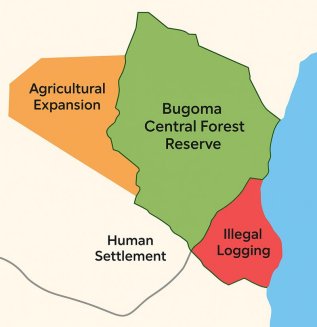
Weak law enforcement compounds these issues. Although patrols have increased, enforcement remains inconsistent due to land-ownership disputes, contested leases, and slow legal processes that create gaps for encroachers to exploit. Alongside this, the reserve faces growing habitat fragmentation as surrounding areas are degraded or converted, isolating Bugoma from neighbouring ecosystems such as the Budongo Forest. This isolation reduces wildlife movement, especially for wide-ranging species like chimpanzees, and undermines long-term ecological resilience. Human–wildlife conflict is also becoming more frequent as settlements and farms expand towards the forest edge. Animals forced to venture out of the forest in search of food and water are now triggering retaliatory actions from local communities. Meanwhile, population growth around the reserve intensifies demand for land, fuelwood, and building materials, increasing pressure on forest resources (see infographic, left). Conservation organisations continue to support restoration, yet limited and inconsistent funding means that efforts such as replanting, community engagement, and long-term monitoring are often under-resourced, slowing progress toward sustainable protection of the reserve. Despite these conservation efforts, the Bugoma Central Forest Reserve is also facing challenges from climate change, which is altering the forest's ecosystem and making it more vulnerable to droughts and other extreme weather events. For visitors to the Bugoma Central Forest Reserve, there are several pieces of advice that can help ensure a safe and enjoyable experience. First and foremost, it is essential to work with a reputable tour operator or guide who can provide valuable insights into the forest's ecosystem and help visitors navigate the reserve's trails and habitats. Visitors should also be respectful of the forest and its inhabitants, keeping a safe distance from wildlife and avoiding any behaviour that could disrupt the natural balance of the ecosystem. In addition, visitors should be prepared for the challenges of travelling in a remote and rugged area, bringing plenty of water, food, and sunscreen, as well as suitable clothing and footwear. By taking these precautions and being mindful of their impact on the environment, visitors can help ensure the long-term sustainability of the forest and its inhabitants. For more about the Bugoma Central Forest Reserve, check out the video above left, then explore the area further using our location map below. |




Bugoma Central Forest Reserve GuideA guide to Bugoma Forest Reserve near Hoima in Uganda, its wildlife and plant species, conservation efforts, together with a video guide and location map Tags: Bugoma Forest Reserve, Bugoma Central Forest Reserve Guide, Bugoma Forest Reserve Wildlife, Bugoma Forest Reserve Conservation Efforts, Bugoma Forest Reserve Video Guide, Bugoma Forest Reserve Location Map |