|
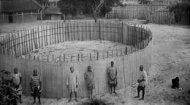
Bunyoro Royal Palace | Bunyoro Royal Palace | Bunyoro Royal Palace | Bunyoro Royal Palace |

|
|
|
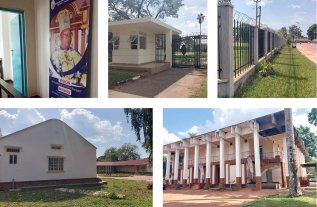
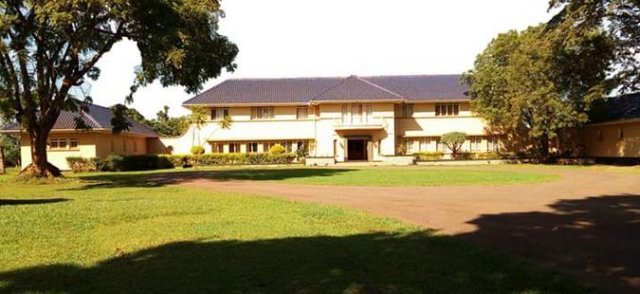
Tourists can reach the area by bus or charter flights, with local guides often accompanying groups to contextualise the palace’s significance. Respect for tradition is paramount, and visitors are encouraged to dress modestly, with long sleeves and trousers, to honour the sacredness of the space. The palace and its grounds are open daily for guided tours, which typically last 2-3 hours and include interactions with royal descendants, who share stories of their ancestors and current efforts to sustain the kingdom’s traditions. Among the palace's most striking features is the Great Hall, a grand structure that dominates the complex. Built to host the king and his court, its asymmetrical, sloping roof is a hallmark of Bunyoro architecture, designed to withstand heavy rains while symbolising the kingdom’s aspirations for growth and stability. At the heart of the hall lies the Omukama’s throne, a wooden seat draped in royal fabrics, with a canopy of papyrus leaves that represents the kingdom’s connection to nature. Surrounding the throne are the Bwanji (drums of war) and the Kamya (drums of peace), instruments that punctuated the rise and fall of battles, treaties, and coronations. Adjacent to the hall are the royal archives, where ancient scrolls and manuscripts recount the history of Bunyoro through the lens of its rulers. The palace grounds also feature the Kasubi Tombs, a UNESCO World Heritage Site that houses the graves of past Omukamas. These tombs, built entirely from papyrus and timber without nails, are a marvel of craftsmanship and a poignant reminder of the kingdom’s spiritual legacy. The surrounding area of Hoima offers additional opportunities for cultural exploration. Nearby villages provide insights into daily life in Bunyoro, with local markets showcasing crafts like pottery and beadwork, as well as performances of traditional songs. The region is also dotted with historical sites, including ancient battlefields and royal hunting grounds, which can be explored with a guide. For those seeking to connect with nature, the Kanyinyei Forest Reserve and Lake Albert’s shores are within reach, offering stark contrasts to the palace’s historical gravitas. Combining these experiences allows visitors to not only understand Bunyoro’s past but also appreciate the vibrant tapestry of its present. Efforts to preserve the Bunyoro Royal Palace and its cultural legacy have been ongoing. Local communities, supported by the government and international organisations, are working to restore deteriorating structures and promote sustainable tourism practices. Educational programs in schools emphasise the importance of Bunyoro traditions, ensuring that future generations remain connected to their heritage. The palace itself has become a focal point for workshops on traditional arts, conservation, and history, fostering a sense of stewardship among the youth. These initiatives are critical in countering the risk of cultural dilution, particularly in the face of modernisation and globalisation. |




Bunyoro Royal Palace GuideA guide to the Bunyoro Royal Palace, the official residence of the Omukama (King) of the Bunyoro-Kitara Kingdom, together with its history, cultural significance, video guide and location map Tags: Bunyoro Royal Palace, Bunyoro Royal Palace Guide, Bunyoro Royal Palace History, Bunyoro Royal Palace Cultural Significance, Bunyoro Royal Palace Video Guide, Bunyoro Royal Palace Location Map |