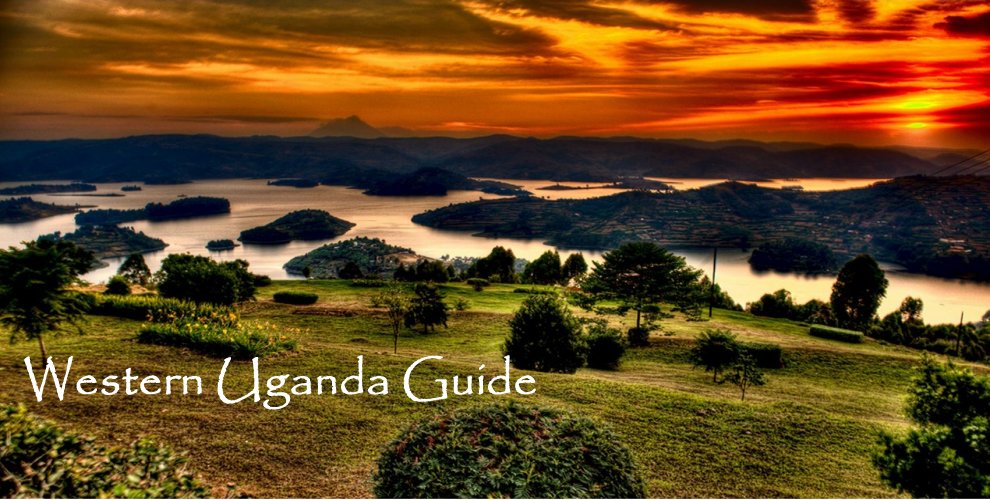
Western Uganda Guide


Great Lakes Museum

With a pledge of "preserving history for our future", the Great Lakes Museum can be found on the Ntungamo to Kabale route on Rwahi Hill just south-west of Rushenyi on the main road. Opened in January 2014, the museum's exhibits are designed to guide the visitor through a chronological and thematic exploration of the region’s identity, linking contemporary communities with the deep roots of their heritage. The earliest galleries focus heavily on archaeology, illustrating the transition from Palaeolithic tool use to the mastery of agriculture and settlement building. Detailed displays showcase pottery shards, burial practices, and remnants of ancient trade networks, illuminating how resources travelled across the lakes and connected early communities. A significant portion of the exhibition space is dedicated to the Iron Age, a period critical for the rise of complex political structures.

Artefacts related to smelting and forging are central, demonstrating the technological prowess attained by early populations, which allowed for the creation of advanced tools, weapons, and ceremonial objects. Interactive models and dioramas reconstruct typical Iron Age homesteads, providing a tangible sense of daily life and labour, while maps track the gradual consolidation of smaller clans into larger, centralised chiefdoms across the lake region. The cultural significance of the museum is perhaps most vividly expressed in its dedication to the royal traditions of the historic Interlacustrine Kingdoms. Uganda was politically structured by powerful pre-colonial states, including Buganda, Bunyoro-Kitara, Nkore (Ankole), and Tooro, whose governance systems, court rituals, and intricate material culture are meticulously documented.

Exhibits dedicated to these kingdoms showcase the regalia of royalty—replicas of ceremonial spears, shields, thrones (known as njuuki or similar regional names), and the famed bark cloth that served as a primary royal fabric, dyed and patterned with intricate designs that signified status and lineage. The museum carefully explains the concepts of traditional land tenure, the role of clan systems, and the sophisticated judicial processes that characterised these monarchies before colonial interference. Beyond political structures, the galleries delve into daily cultural practices, featuring ethnographic collections of traditional musical instruments (such as the amadinda xylophones and various drums essential for court ceremonies), traditional fishing methods specific to the Great Lakes environment, and the highly skilled basketry and weaving practices integral to household economics and ritual use. These displays ensure that the past is understood not merely as static history, but as the foundation of contemporary cultural practices still observed today.

Transitioning from ancient kingdoms, the museum’s historical narrative continues into the periods of external influence, colonialism, and independence. This section uses archival photography, documents, and interactive timelines to explore the arrival of Arab traders, European explorers, and missionaries, charting the dramatic shifts in political power and societal structure that followed. Exhibits critically examine the establishment of protectorate status, the drawing of arbitrary colonial borders, and the resulting economic reorganisation, particularly the introduction of cash crops and modern infrastructure. The post-colonial exhibits are vital to understanding modern Ugandan identity, addressing the various political upheavals, the struggle for national unity following independence, and the resilience of the population through periods of internal conflict.


Great Lakes Museum

Great Lakes Museum

Great Lakes Museum

Great Lakes Museum


Punishment Island

Punishment Island

Punishment Island on Lake Bunyonyi is where unmarried pregnant girls were abandoned to their fate.
More >


Great Lakes Museum

Previous Auto/Stop Next

Great Lakes Museum Uganda

Beyond its exhibition halls, the Great Lakes Museum is distinguished by its vital visitor facilities and infrastructure designed to support both public engagement and rigorous academic research. The museum campus includes dedicated conservation laboratories where artefacts recovered from archaeological sites or donated heritage items are meticulously cleaned, restored, and catalogued, ensuring the long-term viability of the collection. A specialised library and archive facility allows researchers, students, and historians access to primary source materials, field notes, and rare publications necessary for advanced study of the region. For the general public, the facilities are designed for comfort and accessibility, offering guided tours led by knowledgeable local experts who provide a deeper cultural context to the artefacts. Educational outreach rooms are frequently utilised for lectures, workshops, and school programs, making the museum a dynamic educational hub rather than a static display case.

The Great Lakes Museum states "It is hoped this collection can be developed to complement the range of other facilities at the museum from traditional dancing and drama, guided walks, mountain biking, camping and workshops alongside modern eco-friendly cottages for accommodation, camping facilities, children's playground, conference centre and a well stocked bar, restaurant and cafe with high speed internet access." And they state further "the Great Lakes Museum together with the Igongo Cultural Centre are the two museums within Western Uganda where you can learn all about the region's rich heritage. Both provide fascinating insights into local and regional history together with artefacts from the past."

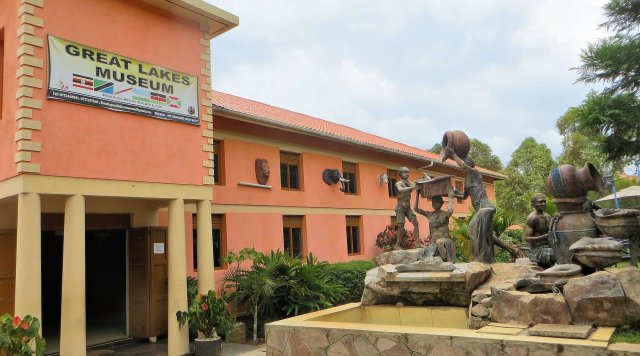
Mm, well, it certainly needs to up its game. But, and there is a big but, there are some simply awesome sculptures within the complex itself created by a local sculptor and they are just breathtaking and make a visit to the centre worthwhile in its own right. Many of these can be seen in the slideshow on your left but they really need to be seen in person to fully appreciate them.

Throw in good food at the restaurant and a well-stocked craft shop, friendly and welcoming staff and its a worthy half day out. As with so many Ugandan tourist attractions, there are different rates for entry to the actual museum section of the site (which is effectively one large room) for locals and foreign nationals, but we're only taking a few £ in total here. If they had put the outside sculptures inside and thrown most of the inside out, it would be excellent value for money! Please note; The Great Lakes Museum is currently closed for renovation.