Western Uganda Guide


Semuliki National Park

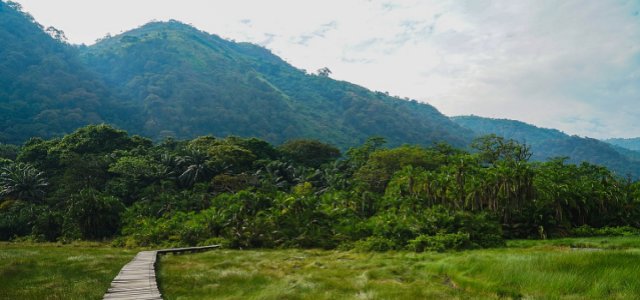
Semuliki National Park was established as a forest reserve in 1932 but later elevated to national park status in 1993. Geologically, the park, East Africa's only lowland tropical rainforest, is next to the Semuliki and Lamia rivers and is located within the Albertine Rift Valley on Uganda's border with the Democratic Republic of Congo, with Lake Albert to the park's north and the stunning Rwenzori Mountains to its south-east. This position places it at a biological crossroads, where East African savannah meets Central African jungle, resulting in a fascinating blend of species. For centuries, the Batwa pygmy community, one of Africa's oldest surviving aboriginal groups, has considered these forests their ancestral home, living in harmony with nature and drawing sustenance from its abundant resources, their traditions intimately woven into the very fabric of the landscape.

Semuliki's wildlife boasts a diversity that underscores its unique position at the edge of the Congo basin. The park is a primate haven, home to eight species, including chimpanzees, black-and-white colobus monkeys, grey-cheeked mangabeys, red-tailed monkeys, and olive baboons. Tracking chimpanzees through the dense undergrowth and catching glimpses of their complex social structures is a highlight for many visitors, offering an intimate encounter with our closest relatives in their natural habitat. Beyond primates, the forest shelters larger mammals, though their elusive nature often requires patience and luck; these include forest elephants, buffalo, leopards, and various antelopes like the waterbuck and the pygmy antelope.

The nocturnal environment comes alive with its own cast of characters, detectable by the rustling leaves and distant calls. But perhaps Semuliki’s most renowned residents are its birds. With over 400 species recorded, including many range-restricted Central African species found at the eastern limits of their range, it is a true birder's paradise. Specialities like the Congo serpent eagle, long-tailed hawk, great blue turaco, red-billed dwarf hornbill, and the rare shoebill stork, often sighted in the wetlands along the Semuliki River, draw ornithologists and enthusiasts from across the globe. The park's diverse flora, consisting of dense tropical lowland rainforest with a mix of Afromontane species, provides the perfect habitat for this incredible array of life, with towering trees forming a thick canopy that creates a perpetually shaded and humid environment.

The attractions within Semuliki National Park are as varied as its wildlife. Foremost among them are the Sempaya Hot Springs, a geological marvel featuring both "male" (Bismark) and "female" (Nyasimbi) springs. These bubbling geothermal wonders are not only a spectacle of nature, powerful jets of hot water gushing from the earth, but also hold deep cultural significance for the local Batwa community, who once used them for rituals. Visitors can experience the springs' incredible heat firsthand by boiling eggs and plantains directly in the geysers.

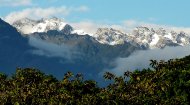
Guided nature walks and forest hikes allow visitors to explore the intricate ecosystems on foot, discovering unique plant life, smaller creatures, and the subtle sounds of the jungle. Community visits to the Batwa pygmy village are incredibly enriching, offering a chance to learn about their ancient forest culture, traditional hunting techniques, dances, and their ongoing efforts to adapt to a changing world while preserving their heritage. Views of the imposing Rwenzori Mountains, often shrouded in mist, provide a spectacular backdrop to the park's lush landscapes, while the Semuliki River itself forms a picturesque natural border with the Democratic Republic of Congo, its meandering course adding to the park's beauty.


Semuliki National Park

Semuliki National Park

Semuliki National Park

Semuliki National Park


Rwenzori Mountains

Rwenzori Mountains National Park

The Rwenzori Mountains National Park is a world-class hiking and mountaineering destination.
More >


Semiliki National Park

Semiliki National Park Guide

Accommodation options within and around Semuliki National Park cater to a range of preferences, though generally leaning towards more rustic and immersive experiences that complement the park's wild character. Inside the park, the Uganda Wildlife Authority (UWA) offers basic bandas and campsites for those seeking an authentic, budget-friendly stay, allowing visitors to fall asleep to the sounds of the forest. Outside the park, particularly closer to Fort Portal or Bundibugyo, there are a few mid-range lodges and guesthouses that provide more comfort and amenities, typically offering hot water, comfortable beds, and sometimes even stunning views of the Albertine Rift. Given the limited number of facilities, especially during peak seasons, it is highly advisable to book accommodation well in advance to ensure availability.

The best time to visit Semuliki National Park is during the dry seasons, typically from December to February and June to August. During these months, the trails are less muddy, and forest walks are generally more comfortable, though the park is accessible year-round. While the wet seasons can make trekking challenging, they also bring out lush vegetation and vibrant birdlife. Accessing Semuliki usually involves a drive from Fort Portal, approximately 50-60 kilometres, on a road that can be rough in sections, so a sturdy 4x4 vehicle is recommended, either self-driven or with a reputable tour operator.

When packing, prioritise comfort and practicality: sturdy waterproof hiking boots, long-sleeved shirts and trousers to protect against insects and scratches, a wide-brimmed hat, sunglasses, rain gear, insect repellent, sunscreen, a personal first-aid kit, and binoculars for wildlife viewing are essential. Don't forget a good camera with extra batteries and memory cards to capture the incredible moments. Health precautions are important; consult your doctor about malaria prophylaxis and ensure your yellow fever vaccination is up to date, as it is a requirement for entry into Uganda. Always stay with your designated guide during forest activities, respect the park rules, and maintain a safe distance from wildlife. Permits for park entry and activities like chimpanzee tracking should be arranged in advance through UWA or your tour operator to avoid disappointment. Finally, always practice responsible tourism by leaving no trace, respecting the environment, and being culturally sensitive when interacting with local communities, particularly the Batwa, ensuring your visit contributes positively to their well-being and the park's conservation efforts.

The entrance fees for Semuliki National Park per day cost £31.50 for foreign non-residents, £23.60 for foreign residents and UGX 20,000 (about £5.00) for East African Citizens. Please check the current fees as they may vary. Now check out the main tourist attractions in the park in the above video.

Semiliki National Park


Tourist
Attractions

Western Uganda Tourist Attractions


Best Things
To Do

Things to do in Western Uganda Guide


Main Ugandan
Towns

Main Ugandan Towns


Western Uganda
Accommodation

Accommodation in Western Uganda Guide